

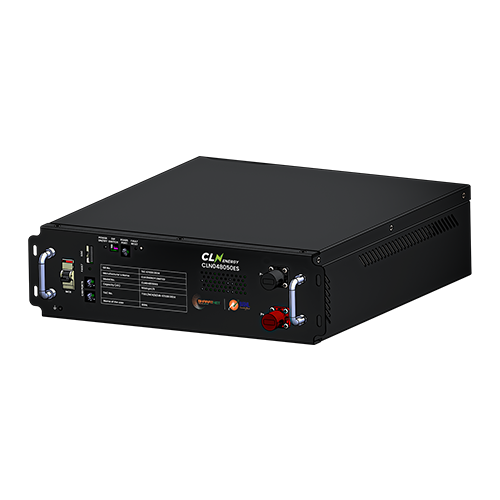
CLN Energy’s New Telecom 48 V battery pack is designed with a 100 Ah & 50Ah capacity battery cell of lithium-ion iron phosphate chemistry. It provides larger capacity in the compact size of a 19” rack- mounted 3U battery module. This pack has RS485 communication and a built-in BMS with automatic protection, cell balancing and master slave function for higher capacity to offer safe and highly efficient operation to customers. The pack application is developed for telecom equipment power backup. Under normal conditions, grid AC power supplies to a rectifier module and the telecom loads and also charges a battery pack. When the AC power fails, the rectifier module stops power supply to loads, the battery ensures the telecom equipment operates normally. When the AC power is switched on again, power from the rectifier module to the telecom equipment is recovered and it charges the battery pack back to backup status.

Communication

BMS In-Built Function

Battery Performance

Indication

Zero Maintenance

Display
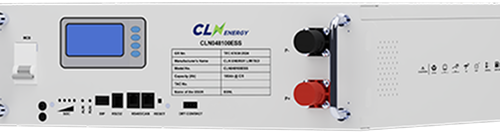
CLN Energy’s New Telecom 48 V battery pack is designed with a 100 Ah & 50Ah capacity battery cell of lithium-ion iron phosphate chemistry. It provides larger capacity in the compact size of a 19” rack- mounted 3U battery module. This pack has RS485 communication and a built-in BMS with automatic protection, cell balancing and master slave function for higher capacity to offer safe and highly efficient operation to customers. The pack application is developed for telecom equipment power backup. Under normal conditions, grid AC power supplies to a rectifier module and the telecom loads and also charges a battery pack. When the AC power fails, the rectifier module stops power supply to loads, the battery ensures the telecom equipment operates normally. When the AC power is switched on again, power from the rectifier module to the telecom equipment is recovered and it charges the battery pack back to backup status.

Communication

BMS In-Built Function

Battery Performance

Indication

Zero Maintenance

Display
A telecom site fails in a way few other installations do: quietly, at three in the morning, somewhere nobody visits for a week. The battery is usually what failed, and on most Indian tower sites it is a lead-acid string that has been cycling on unreliable grid power and running hot in an unconditioned shelter.
Both are rack-mountable, use lithium iron phosphate cells, and carry a battery management system with remote monitoring so site state is visible without a truck roll.
Three reasons, in the order operators usually care about them. Lifetime: a lithium pack rated for thousands of cycles outlasts a VRLA string that degrades every time the grid drops. Temperature: LFP tolerates the heat inside an unconditioned shelter that shortens lead-acid life dramatically. Theft and weight: a lithium pack is a fraction of the weight for the same energy, which changes what a site needs structurally and what is worth stealing.
Remote monitoring is the practical difference. Knowing a site's state of charge from a dashboard is what turns an emergency visit into a scheduled one.
Backup time depends on site load and how long the grid is typically out. Give us the load in watts and the autonomy you need in hours and we will size the pack; where a site has solar or a generator, the system can be configured to work alongside them rather than around them.
Manufactured at our Noida plant, with service across more than 50 cities. For operators running distributed sites, that network is usually the deciding factor.
A storage proposal is built from the site rather than from a catalogue, so the first conversation is short and specific. Three answers are enough to start:
With those three, the team can size the system, name the models that fit and put a figure against it. Send the details and the energy storage team will come back with a configuration.
System-level material for energy storage is on our dedicated website, storage.clnenergy.in, including rack mounted energy storage and lead acid replacement batteries.
For towers, our largest deployment is the lithium replacement across the BSNL network, and how to size a battery for a telecom tower works through the load, the autonomy and the shelter temperature.
These products are part of our energy storage range. On our dedicated energy storage website, storage.clnenergy.in, we set out what a system costs per kWh and how long it takes to pay for itself.
Also in this application, on our energy storage website:
Li-ion offers higher energy density, longer lifespan, faster charging, and reduced maintenance compared to VRLA or lead-acid batteries.
Yes, Our telecom Battery is modular, compact, and compatible with existing SMPS.
Yes, we offer cloud-based and Bluetooth-enabled monitoring, ideal for remote and unmanned site.

 Become a
Partner